July 17, 2025 · 4 min read
Oven Not Heating Evenly? Here Are the Most Common Causes
If your cookies are burning on one side and raw on the other, something is wrong. Learn what causes uneven oven heating and how to fix it.
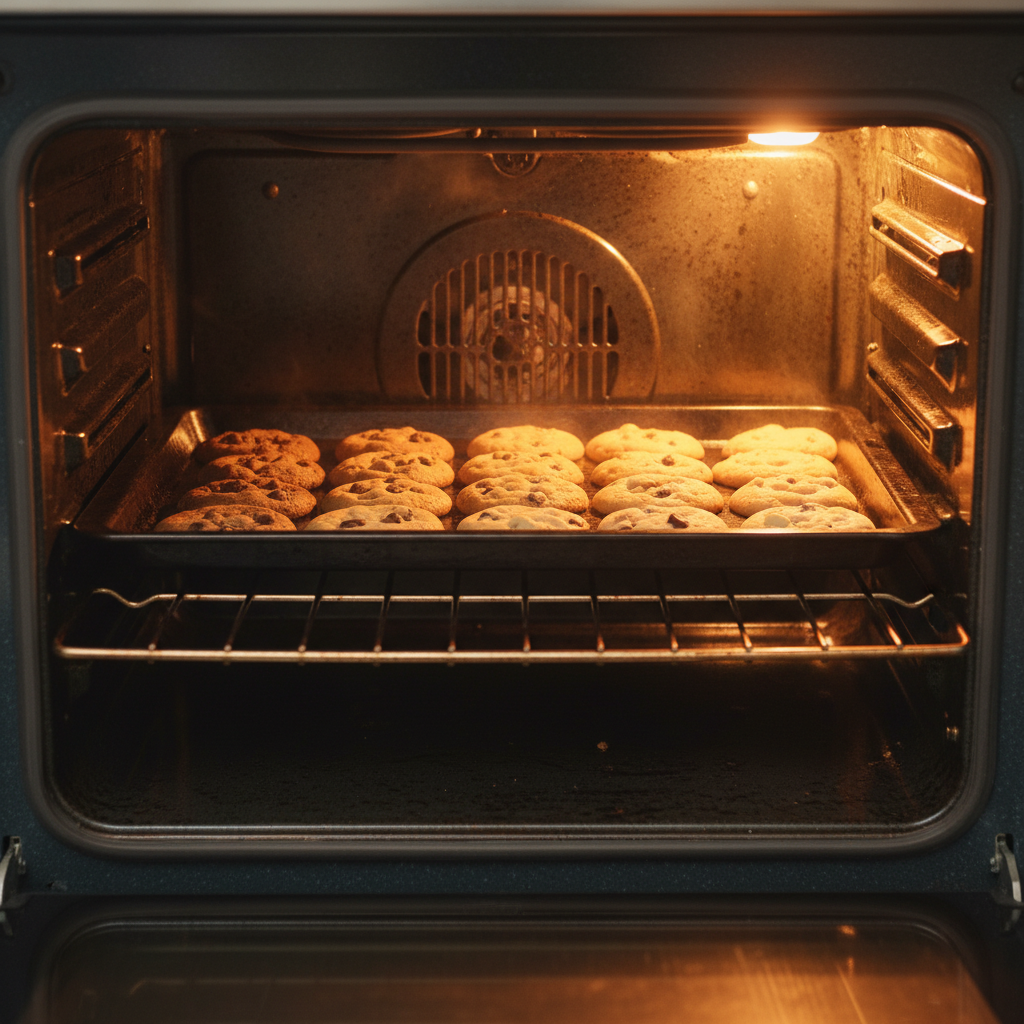
You follow the recipe exactly, set the correct temperature, and place the baking sheet in the center of the oven. Twenty minutes later, the cookies on the left are golden brown and the ones on the right are barely set. Or the bottom of your casserole is scorched while the top is lukewarm. Uneven oven heating is one of the most frustrating kitchen problems because it affects everything you cook, and the cause is not always obvious.
Here are the most common reasons your oven is not heating evenly, ranked from the simplest fixes to the ones that require professional repair.
The Oven Is Not Level
This sounds too simple to be real, but it matters. If your oven is not perfectly level, liquids in baking pans pool to one side, and heat distribution inside the cavity shifts slightly. Over time, floors settle and appliance feet get bumped. Place a bubble level on the oven rack and check both side to side and front to back. Most ranges have adjustable feet that you can turn by hand or with a wrench to correct the level.
The Racks Are in the Wrong Position
Oven rack position has a significant effect on how food cooks. The heating element at the bottom radiates heat upward, and the element at the top (used for broiling) radiates downward. For most baking, the rack should be in the center position so that food receives relatively even heat from both directions.
If you are baking on two racks simultaneously, position them in the upper and lower thirds of the oven with enough space between them for air to circulate. Overcrowding the oven with multiple pans blocks airflow and creates hot and cold spots.
The Bake Element Is Failing
The bake element is the heating coil at the bottom of the oven. When it is working correctly, it should glow evenly red-orange across its entire length. If you see sections that are not glowing, or bright hot spots alternating with dark spots, the element is failing. A partially failed bake element produces uneven heat because some portions are generating full power while others are producing little or none.
Turn off the oven, let it cool completely, and visually inspect the element. Look for blistering, cracks, or spots where the metal has expanded. A failing bake element should be replaced promptly because the damaged sections can eventually short against the oven floor, which can trip the breaker or damage the control board.
The Temperature Sensor Is Inaccurate
Modern ovens use a temperature sensor — a thin metal probe, usually located at the top rear of the oven cavity — to monitor the internal temperature and signal the control board to cycle the element on and off. If the sensor is reading incorrectly, the oven may overshoot or undershoot the set temperature, and it may not cycle the element at the right times.
You can test this with an oven thermometer, which costs a few dollars at any kitchen supply store. Set the oven to 350 degrees, wait 20 minutes for it to stabilize, and check the thermometer reading. If the actual temperature is off by more than 25 degrees from the set temperature, the sensor likely needs to be replaced or recalibrated.
Some oven models allow you to calibrate the temperature offset through the control panel settings. Check your owner’s manual for instructions. If calibration does not resolve the issue, the sensor itself is probably faulty.
The Convection Fan Is Not Working
If your oven has a convection setting, it uses a fan at the back of the cavity to circulate hot air. This is what makes convection cooking faster and more even than conventional baking. If the fan motor has failed or the fan blade is damaged, the air does not circulate and you lose the primary benefit of convection mode.
Turn on the convection setting and listen for the fan. You should hear it running within a minute of the oven reaching temperature. If you hear nothing or hear grinding or clicking, the fan motor may need to be replaced. This is a repair that requires removing the back panel inside the oven cavity, which is straightforward for a technician but can be tricky for a homeowner without experience.
The Door Seal Is Compromised
The gasket around the oven door keeps hot air inside the cavity. If the gasket is torn, hardened, or missing sections, heat escapes unevenly around the door perimeter. This creates temperature inconsistencies inside the oven and forces the element to run more than it should.
Run your hand along the outside of the closed oven door while it is heating. If you feel significant heat escaping at any point along the seal, the gasket needs to be replaced. Oven door gaskets are inexpensive parts, and most can be replaced without tools — they either clip or press into a channel around the door frame.
Igniter Issues on Gas Ovens
Gas ovens use an igniter to light the burner. As the igniter ages, it takes longer to heat up to the temperature needed to open the gas valve. During this extended preheat phase, the oven heats unevenly because the burner is cycling inconsistently. You may also notice that the oven takes significantly longer to preheat than it used to.
A weak igniter that still technically works can cause more problems than one that has failed completely, because it produces intermittent and unpredictable heating patterns. If your gas oven takes more than 15 minutes to preheat to 350 degrees, the igniter is likely losing strength and should be replaced.
When to Call for Help
Rack positioning and leveling are easy fixes you can handle yourself. A damaged bake element, failed temperature sensor, or bad convection fan motor are repairs that most homeowners should leave to a professional, both for safety and to avoid damaging the appliance.
At Kaufman County Appliance Repair, we diagnose oven problems on the first visit and carry the most common replacement parts on our service vehicles. We offer same-day service throughout Forney, Kaufman, Terrell, Midlothian, and surrounding areas. Call (214) 440-8550 to schedule a repair.